Introduction to Electrical Power Distribution Systems
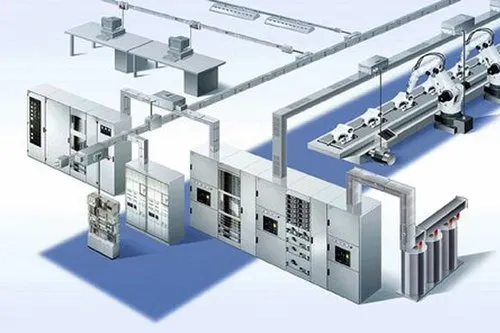
The electrical power distribution system is responsible for transferring electrical energy from the main power source to all loads in a building (lighting, HVAC, power outlets, special equipment) safely and efficiently.
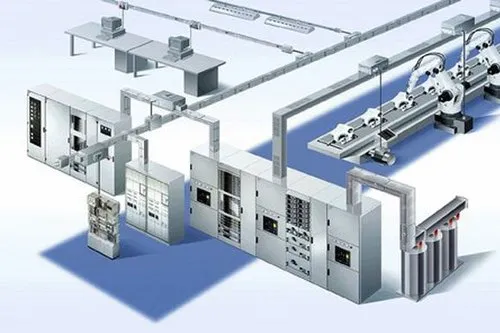
Main Components of a Power Distribution System
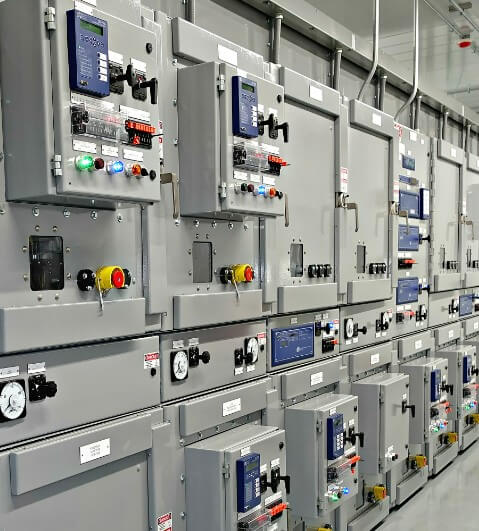
1. Main Distribution Board (MDB)
Receives supply from the main transformer and distributes to sub-distribution boards.
2. Sub-Distribution Boards (SDB)
Feed specific areas in the building (floor, wing, sector).
3. Final Distribution Boards (FDB)
Feed final loads (lighting, sockets, air conditioners).
4. Circuit Breakers
Types: MCB, MCCB, ACB, RCCB, RCBB depending on current rating and application.
5. Electrical Cables
Types: XLPE, PVC, LSZH, FP (fire-resistant).
Grounding Systems
- TN-S: Separate neutral and protective earth conductors.
- TN-C: Combined protective and neutral conductor (PEN).
- TN-C-S: Mixed system (used in most buildings).
- TT: Independent grounding per building.
- IT: Ungrounded system (for hospitals and operating rooms).
Circuit Breaker Classification Table by Current Rating
| Type | Current Range (A) | Application |
|---|---|---|
| MCB | 1-125 | Final circuits, homes, offices |
| MCCB | 100-2500 | Feeding sub-boards, industrial |
| ACB | 800-6300 | Main incomers, substations |
| RCCB | 25-125 | Electric shock protection |
International Standards for Power Distribution
- IEC 60364: For electrical installations in buildings.
- NEC (NFPA 70): National Electrical Code (USA).
- BS 7671: British Standard (IET Wiring Regulations).
- IEEE 1584: For arc flash energy calculation.
- IEC 61439: For low-voltage switchgear and controlgear assemblies.
Steps for Designing a Power Distribution System
- 📊 Calculate electrical loads for each area (lighting, power, HVAC, special equipment).
- 🔌 Determine demand factor for each load type.
- 📏 Determine electrical panel locations (load center).
- 📐 Calculate cable cross-sections (based on current, route length, temperature).
- 🛡️ Select appropriate protection circuit breakers (based on expected short-circuit current).
- ⚡ Study protection coordination (selective coordination).
- 🌍 Design grounding and lightning protection system.
Common Mistakes in Power Distribution Design
- ❌ Inaccurate short-circuit current calculation.
- ❌ Neglecting correction factors for temperature and installation methods.
- ❌ Unbalanced load distribution across three phases.
- ❌ Not considering harmonics from non-linear loads.
- ❌ Not providing sufficient space for future expansion (20-30%).
💡 Engineering Recommendation: For large projects, perform short-circuit analysis using software such as ETAP or SKM to accurately determine breaker ratings and avoid cascading failures.