What is a Water-Cooled Chiller?
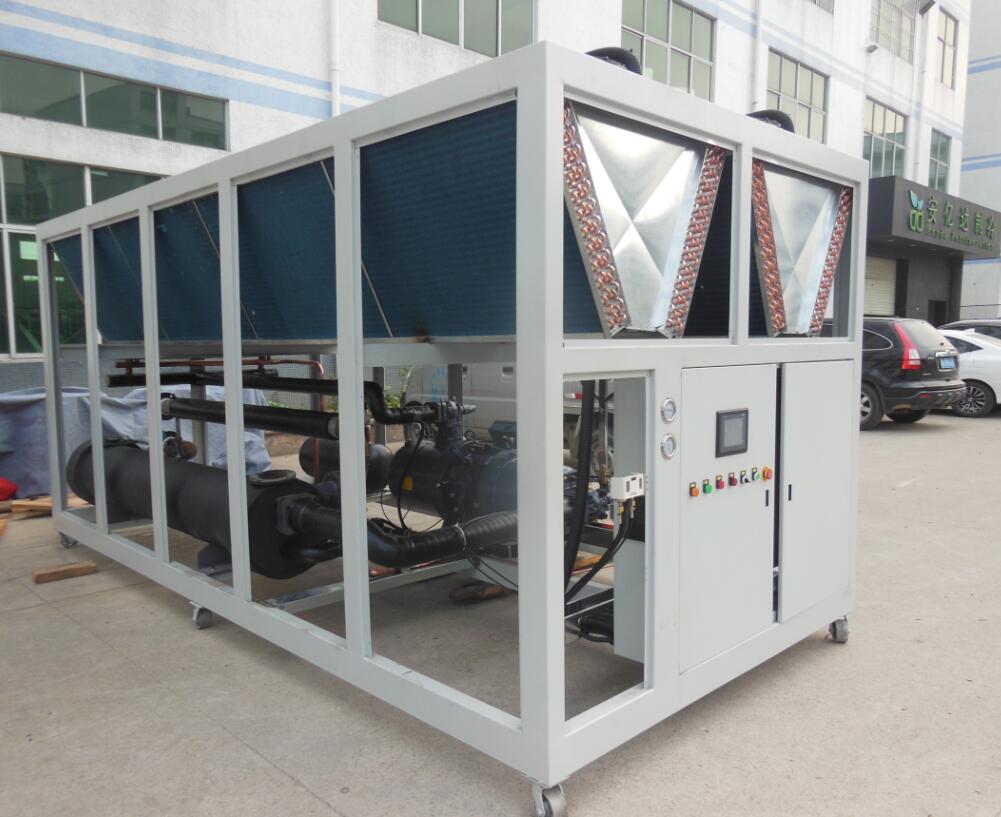
A water-cooled chiller (Chiller) is a device used to remove heat from a liquid (usually water) through a vapor-compression or absorption refrigeration cycle, and the chilled water is used for air conditioning or industrial cooling.
Types of Water-Cooled Chillers
First: By Cooling Method
- Water-Cooled Chillers: Use a cooling tower to reject heat, higher efficiency.
- Air-Cooled Chillers: Use fans to reject heat, easier installation.
Second: By Compressor Type
- Screw Chillers: Medium to high capacity (100-1000 tons of refrigeration).
- Scroll Chillers: Small to medium capacity (10-200 tons of refrigeration).
- Centrifugal Chillers: Very high capacity (300-3000+ tons of refrigeration).
- Absorption Chillers: Operate on heat instead of electricity.
Basic Components of a Water-Cooled Chiller
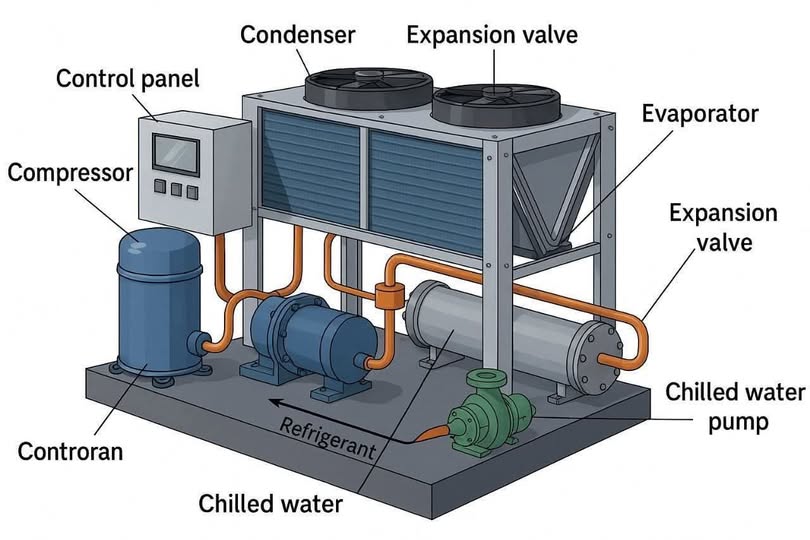
- Compressor: The heart of the system, compresses the refrigerant gas.
- Condenser: Rejects heat from the refrigerant gas.
- Expansion Valve: Reduces refrigerant pressure and temperature.
- Evaporator: Absorbs heat from the water to be cooled.
- Control Panel: Supervises system operation.
Chiller Types Comparison Table
| Type | Range (tons) | COP | Applications |
|---|---|---|---|
| Screw | 100-1000 | 4.0-5.5 | Commercial buildings, industries |
| Scroll | 10-200 | 3.5-4.5 | Small buildings, villas |
| Centrifugal | 300-3000+ | 5.5-7.0 | Hospitals, large complexes |
| Absorption | 50-2000 | 0.7-1.2 | Waste heat, solar |
Preventive Maintenance Tips for Water-Cooled Chillers
- 🔧 Check refrigerant pressure monthly and record readings.
- 💧 Analyze cooling water and chilled water quality every 3 months.
- 🧹 Periodically clean condenser and evaporator coils.
- ⚡ Check compressors and cooling fans electrical current.
- 📊 Calibrate control and sensing devices annually.
- 🛢️ Check compressor oil and change according to manufacturer recommendations.
💡 Important Note: Centrifugal chillers are currently the most efficient on the market, using magnetic bearing technology to reduce energy consumption by up to 40%.