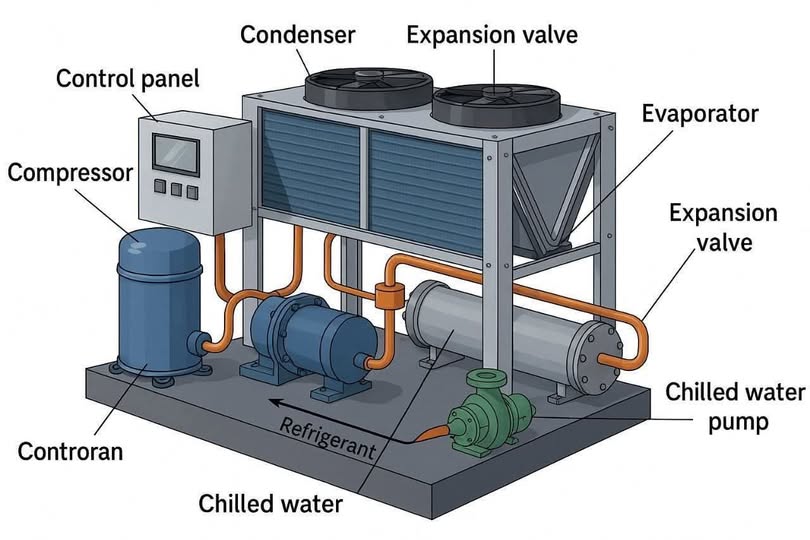
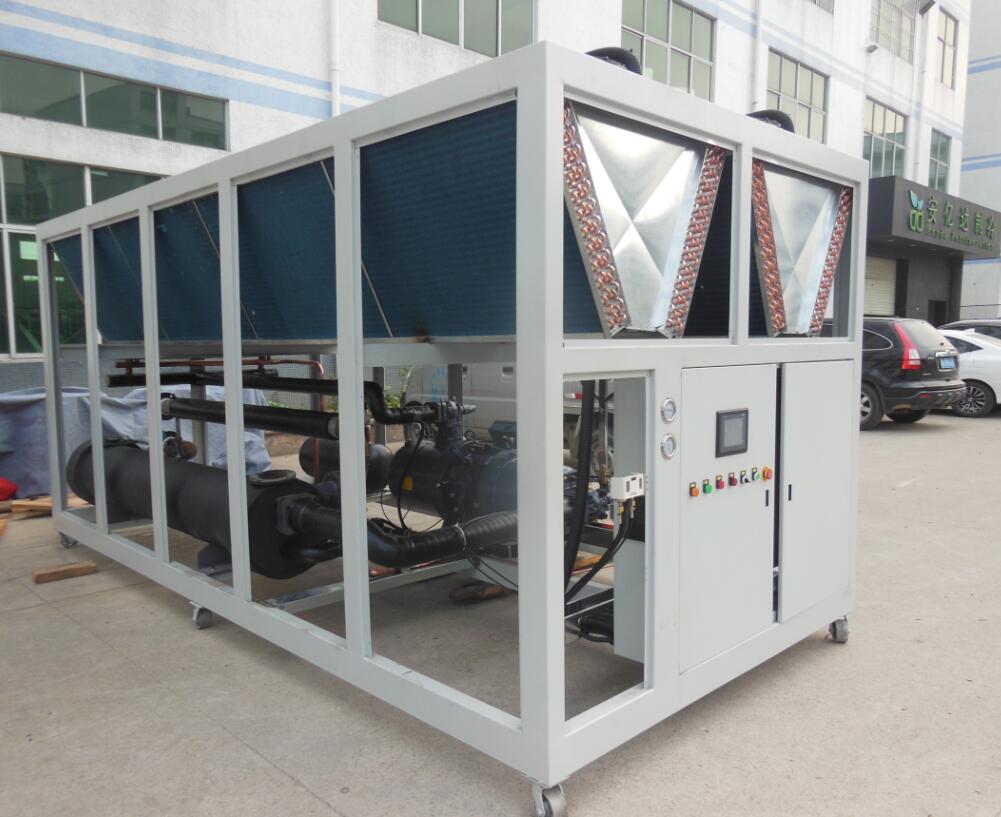
What is a Water-Cooled Chiller?
A water-cooled chiller is a central cooling device that cools large quantities of water (chilled water), then distributes this chilled water through a network of pipes to Air Handling Units (AHUs) and Fan Coil Units (FCUs) spread throughout the building.
Water-cooled chillers are the optimal choice for buildings exceeding 3,000 m² or with a cooling capacity of 150 tons or more.
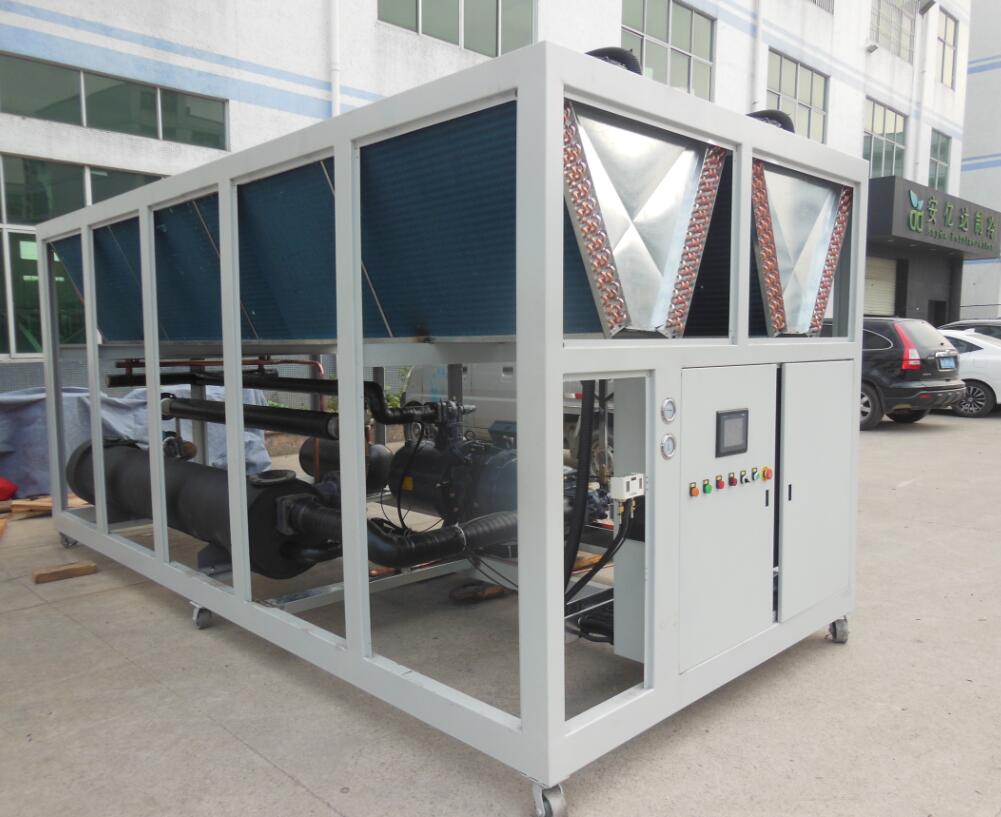
Types of Water-Cooled Chillers
1. Air-Cooled Chillers
Installed outdoors (rooftop or ground). They condense refrigerant using air fans.
- Advantage: No cooling tower required — lower operating and maintenance costs
- Disadvantage: Lower efficiency in hot climates (COP decreases as temperature rises)
- Suitable range: 20 – 500 tons of refrigeration
2. Water-Cooled Chillers
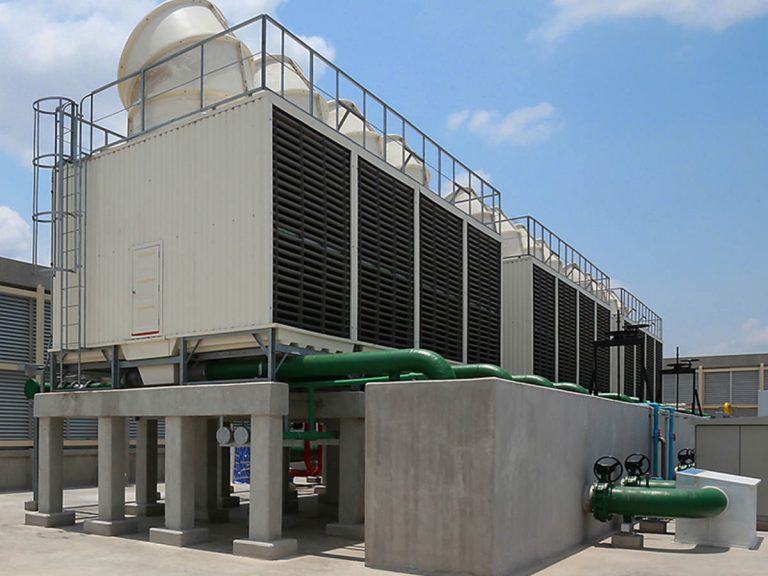
Use a cooling tower to reject heat. They offer significantly higher efficiency.
- Advantage: COP up to 7.0 — best for large projects
- Disadvantage: Requires mechanical room + cooling tower + water treatment
- Suitable range: 100 – 5,000+ tons of refrigeration
3. Absorption Chillers
Operate using thermal energy (steam or hot water) instead of electricity. Ideal when free waste heat is available.
Energy Efficiency Metrics
| Metric | Definition | Minimum (ASHRAE 90.1) |
|---|---|---|
| COP | Coefficient of Performance at full load | ≥ 5.0 (air-cooled) |
| EER | Energy Efficiency Ratio | ≥ 17.0 BTU/W·h |
| IPLV | Integrated Part Load Value | ≥ 6.1 (air-cooled) |
| kW/ton | Power consumed per ton of refrigeration | ≤ 0.70 kW/ton |
Types of Water-Cooled Chiller Compressors
Screw Compressor
Most common in the 100-1,000 ton range. Characterized by high reliability and lower maintenance than reciprocating compressors.
Centrifugal Compressor
For very large projects (500-5,000 tons). Achieves COP efficiency up to 7.5 in the latest magnetic bearing models.
Magnetic Bearing Centrifugal Compressor
The latest technology on the market. Oil-free operation, exceptional efficiency of 0.50 kW/ton, and service life exceeding 25 years.
Chiller Capacity Selection Formula
Chiller Capacity (RT) = (Chilled water flow L/s × ΔT °C × 4.18) ÷ 3.517
Where ΔT = temperature difference between chilled water supply and return (typically 5-7°C in modern designs)
Installation Requirements per ASHRAE
- Chilled water supply temperature: 6-7°C (industry standard)
- Chilled water return temperature: 11-12°C
- System pressure: 10 bar minimum
- Water flow rate: 0.18 – 0.24 L/s per ton of refrigeration
- Pipe thermal insulation: Armaflex 25mm thickness for pipes up to 4 inches