The Indoor Air Crisis: Shocking Numbers
According to the World Health Organization, humans spend 90% of their time indoors, where air pollution can be 2-5 times higher than outdoors. This makes Indoor Air Quality (IAQ) a top priority in modern engineering design.
Sources of Indoor Air Pollution
- PM2.5 and PM10: Fine particles from outdoor pollution and indoor fumes
- VOCs: Volatile Organic Compounds from paints, furniture, and carpets
- CO₂: Human respiration — high levels indicate insufficient ventilation
- Germs and viruses: Airborne transmission, especially in enclosed spaces
- Excess humidity: Encourages mold and fungi growth
Air Purification Technologies: Comprehensive Comparison
| Technology | What it removes | Efficiency | Best application |
|---|---|---|---|
| HEPA H13 Filters | Particles ≥ 0.3 microns | ≥ 99.95% | Hospitals, offices |
| HEPA H14 Filters | Particles ≥ 0.3 microns | ≥ 99.995% | Operating rooms |
| Activated Carbon (GAC) | VOCs, odors, chemicals | 85-95% | Laboratories, kitchens |
| UV-C (254nm) | Bacteria, viruses, mold | 99.9% | HVAC systems |
| Bipolar Ionization | Particles, some germs | Variable | Supplementary for offices |
| Photo-Catalytic (PCO) | VOCs, germs | Moderate | Limited areas |
UV-C in HVAC Systems: Engineering Details
Microbes are killed by a UV-C dose measured in μW·s/cm². Required dose:
- E.coli bacteria: 6,600 μW·s/cm²
- Influenza A virus: 6,600 μW·s/cm²
- SARS-CoV-2: 3,400 μW·s/cm² (CDC 2020 estimates)
Design of Make-Up Air Units (MAU)
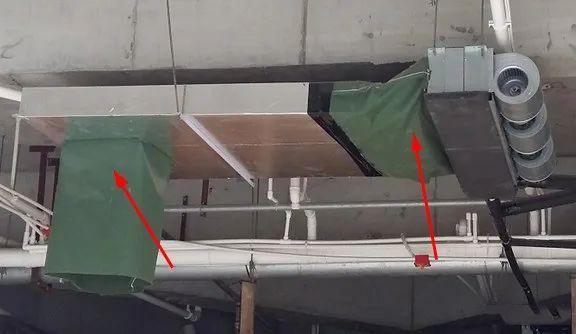
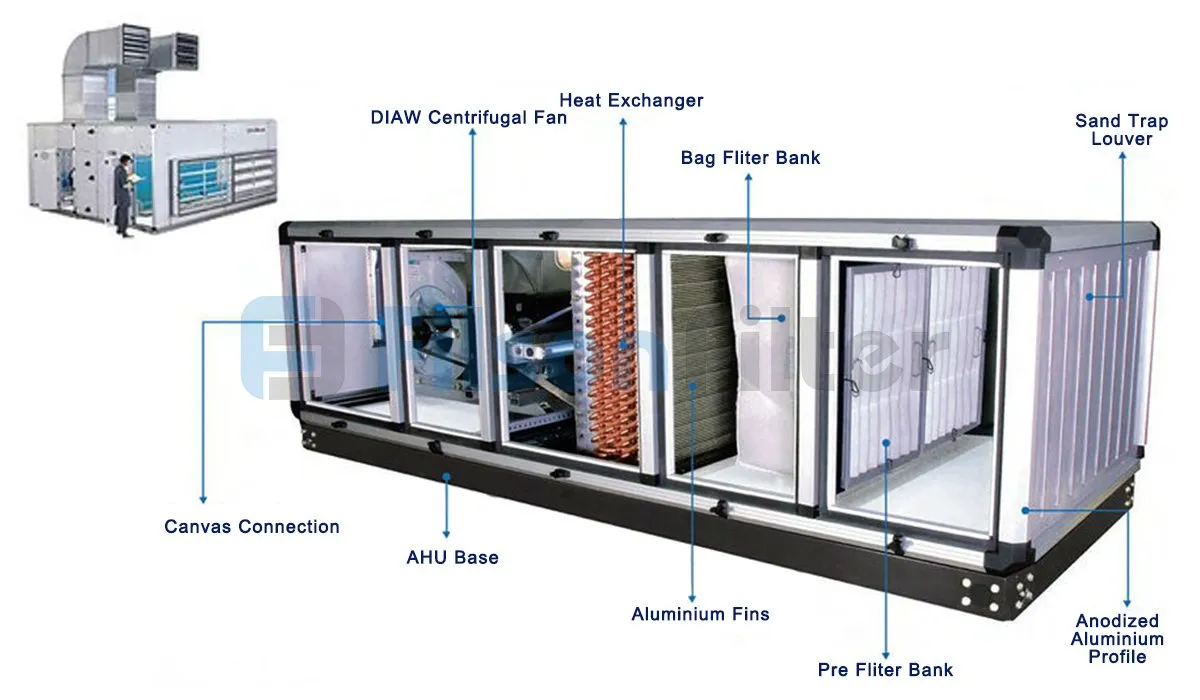
A MAU conditions outdoor air before distributing it throughout the building. It should include:
- Pre-Filter (G4): Primary protection to remove large particles
- Cooling Coil: Cools and dehumidifies outdoor air
- Medium Filter (F7): Removes fine particles ≥ 1 micron
- Heating Coil: Reheats air to achieve required humidity
- HEPA H13 (optional): For clean room applications
- UV-C Lamps: Final disinfection before distribution
ASHRAE 62.1 Fresh Air Requirements
- Offices: 8.5 L/s per person + 0.9 L/s/m²
- Meeting halls: 10 L/s per person
- Retail: 0.9 L/s/m² + 3.6 L/s per person
- Academic spaces: 8 L/s per person