
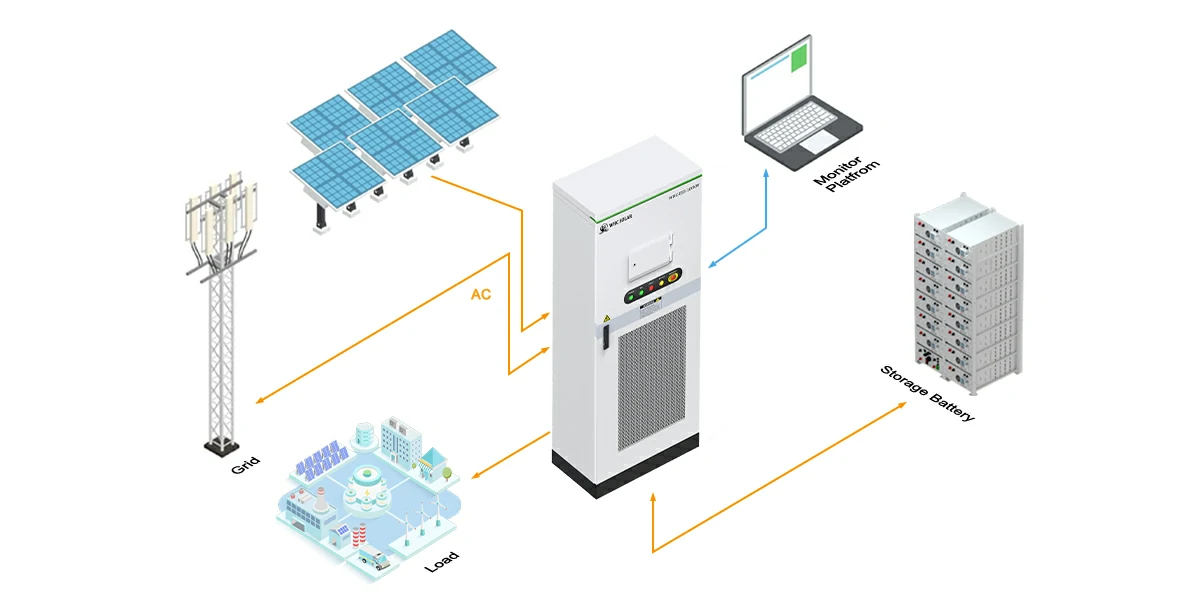
Introduction to Electrical Distribution System Design
The electrical distribution system is the backbone of any facility. Incorrect design means: electrical fires, process downtime, and legal penalties. The IEC 60364 engineering standard is the most comprehensive international reference for this purpose.
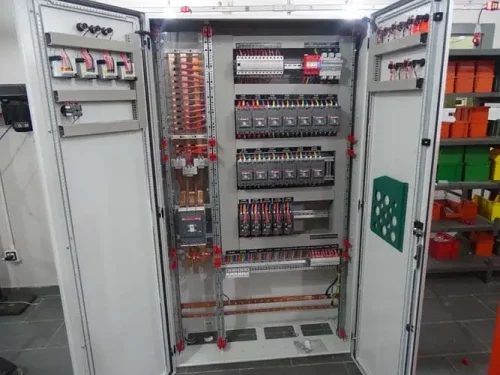
Electrical Distribution System Structure
The complete system consists of three levels:
- Level 1 — Primary supply: Power station (11kV or 33kV) → Main transformer → MDB
- Level 2 — Secondary distribution: MDB → SDBs via main cables
- Level 3 — Final distribution: SDB → SSSDBs → outlets, motors, lighting
Earthing Systems
| System | Code | Best application | Key advantage |
|---|---|---|---|
| TN-S | Separate N and PE | Commercial and industrial buildings | Excellent protection, good EMC |
| TN-C-S | PEN then separation | Renovated old buildings | Economical |
| TT | Independent earth | Rural areas | Better protection when earth resistance is high |
| IT | Fully isolated from earth | Hospitals, mines | Continuity on first fault |
Load Current and Cable Sizing
Three-Phase Load Current Equation
I_L (A) = P (W) ÷ (√3 × V_L × PF × η)
Example: 75kW motor, 380V, PF=0.85, η=0.92
I_L = 75,000 ÷ (1.732 × 380 × 0.85 × 0.92) = 137.5A
Cable Cross-Section Selection Table (NYY/XLPE)
| Current (A) | NYY Cable Size | XLPE Size | MCCB Rating |
|---|---|---|---|
| Up to 32A | 4 × 6mm² | 4 × 4mm² | 40A |
| 32 – 63A | 4 × 16mm² | 4 × 10mm² | 63A |
| 63 – 100A | 4 × 25mm² | 4 × 16mm² | 100A |
| 100 – 160A | 4 × 50mm² | 4 × 35mm² | 160A |
| 160 – 250A | 4 × 95mm² | 4 × 70mm² | 250A |
| 250 – 400A | 4 × 150mm² | 4 × 120mm² | 400A |
| 400 – 630A | 4 × 240mm² | 4 × 185mm² | 630A |
IP Protection Ratings for Electrical Panels
| IP Rating | Meaning | Application |
|---|---|---|
| IP31 | Protection from large dust particles and vertical rain | Protected indoor |
| IP44 | Protection from particles > 1mm and splashing water | Damp areas |
| IP54 | Dust protection and water splashes from all directions | Protected outdoor |
| IP65 | Fully dust-tight + water jet resistant | Open outdoor |
| IP66 | Fully dust-tight + powerful water jet | Heavy industrial |
Busbar Trunking System
For vertical distribution in tall buildings and horizontal distribution in factories, the Busbar Trunking system is preferred over traditional cables for high loads (>800A) because it is:
- Safer: Better fire containment
- Easier to expand: Add tap-off points without cutting power
- Cheaper in the long run for loads above 1600A